Nio. The name itself hums with a certain futuristic energy, doesn't it? For those of us in the tech and investment world, it's been a wild ride watching this electric vehicle innovator navigate the twists and turns of the market. We've seen the stock price surge, and yes, we've seen it dip – most recently, a 13% drop after a brief high of $7.89 in October, now hovering around $5.75. Some investors, remembering the heady days of $62.84 back in 2021, are understandably hesitant.
But here's the thing: focusing solely on the stock price is like judging a symphony by a single note. It's missing the entire composition.
Let's zoom out and look at the broader strokes of Nio's story. October 2025 saw a staggering 92.6% year-over-year increase in deliveries, totaling over 40,000 vehicles. That’s not just growth; that’s hypergrowth. Sure, European sales have seen a dip from their 2023 peak, but Nio isn't backing down. They're doubling down.
Think about it: expansion into seven more European countries, the introduction of right-hand drive models for Singapore, and a bold move into Uzbekistan and Costa Rica – their first foray into North America! This isn't a company retreating; it’s a company aggressively planting flags across the globe. They are thinking globally, and acting locally.
And while some might fret over those past net losses – widening to $3 billion in 2024 – the trendline is just as important. Nio has demonstrably shrunk those losses sequentially each quarter in 2025, with margins also improving. In fact, whispers are circulating that Nio is aiming for its first profitable quarter in Q4 2025!
What does this tell us? It tells us that Nio is learning, adapting, and iterating – the hallmarks of any successful tech company. This reminds me of Tesla, which posted net losses for a decade before the Model Y’s launch in 2020 finally pushed them into profitability. The journey to profitability isn’t always a straight line; it’s often a winding road with unexpected potholes. But the destination, a sustainable and profitable future, is what matters.
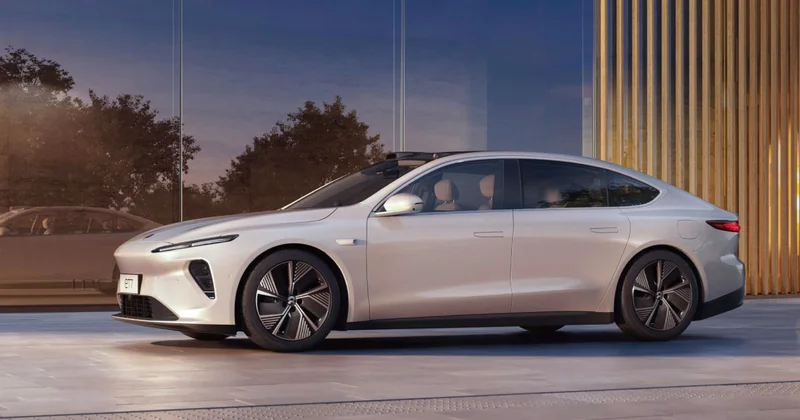
The introduction of the Firefly brand in Europe, targeting that premium compact market, is a smart move. And the launch of sub-brands like Onvo, with the L90 budget six-seat SUV, shows that Nio understands the need to diversify and cater to a broader range of consumers.
But I think it's their focus on affordable vehicles, leading to the aforementioned margin compression, that is the most important thing. The company is willing to sacrifice short-term profits for long-term market share. The question is: will this pay off? As some analysts have noted, now may be a good time to invest, as Nio is trading Should You Buy Nio While It's Below $7? - The Motley Fool.
The biggest challenge, of course, remains profitability. Can Nio truly scale and become a profitable enterprise? And what about those European tariffs looming on the horizon, threatening to clip the wings of Chinese EV makers?
The key here, as always, is innovation. Nio isn't just building electric cars; they're building an entire ecosystem. From battery swapping technology to advanced autonomous driving systems, they're pushing the boundaries of what's possible. This is the kind of long-term thinking that excites me, the kind of vision that can truly disrupt an industry.
When I look at Nio, I see a company that’s not afraid to take risks, to experiment, and to learn from its mistakes. I see a company that's committed to innovation and to building a sustainable future. And that's why, despite the recent stock dip, I remain incredibly optimistic about Nio's long-term prospects.




Rain Today: What the Models Actually Say
2025-11-26